Dave Smith
Hosted by Dave Smith, Dr. Cornel West, Coleman Hughes, and Coleman Hughes
This syndicated show page highlights the latest episodes, hosts, and listening links.
Episode archive
7 total
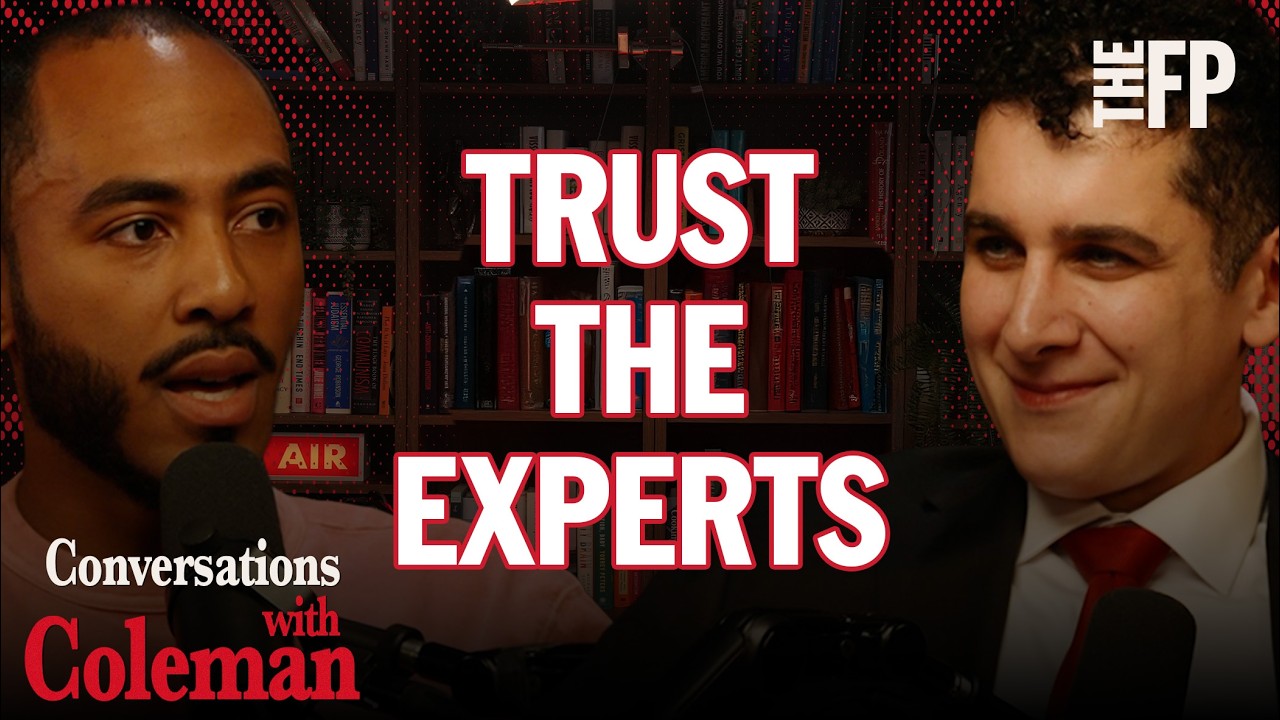
Richard Hanania is a political scientist, writer, and one of the more interesting and unpredictable thinkers working today. He first came to prominence as a critic of woke ideology and the legal architecture that enforces it, most thoroughly in his book The Origins of Woke. His new book, Kakistocracy: Why Populism Ends in Disaster, goes in what appears to be the opposite direction. It’s a rigorous case against antiestablishment politics and the forces driving it, arguing that, for all its appeal, rule by the crowd tends to produce worse outcomes than rule by institutions. I’ve wanted to have Richard on for a while, partly because his intellectual journey is worth taking seriously. A few years ago, it emerged that he had spent time posting under a pseudonym in alt-right circles, saying things that were racist and indefensible. He didn’t hide from it. He addressed it directly, explained how his thinking had changed, and moved on. That kind of honesty is rare, and I think it gives him credibility on these topics that most people don’t have. We cover a lot of ground. We get into what an “elite” actually is, why experts tend to be right more often than their critics, and where the line is between healthy skepticism of institutions and the kind of conspiratorial thinking that leads people off a cliff. We also talk about the military industrial complex, whether it’s real, and why foreign policy is one area where even credentialed experts may not know much more than anyone else. We end on something more personal. Richard has a theory about what drives young men toward political extremism, rooted in his own experience, and his advice for anyone going down that road is some of the most direct and useful I’ve heard on the subject. 0:00 Intro 1:56 Richard's Alt-Right Past and Intellectual Journey 8:40 Should Richard Have Apologized? 13:23 What Is Populism? 17:33 What Is an Elite? 23:59 The Case for Elites and Against Populism 35:01 When Should You Trust Experts? 38:30 The Paradox of Anti-Establishment Audiences 44:52 What Explains the Rise of Populism? 50:53 How Social Media Broke the Gatekeepers 53:43 Populism's Style and Aesthetics 55:17 The Military Industrial Complex 1:00:57 Left-Wing Populism and the Future of the Democratic Party 1:05:24 Why Populism Skews Right 1:08:01 Richard's Palestinian Heritage and the Israel-Palestine Conflict 1:10:58 The Role of Christianity vs. Islam in Palestinian Politics 1:14:46 Advice for Angry Young Men

After the weekend of America’s 250th, I wanted to sit down with someone who could do more than celebrate or condemn our nation. The 250th birthday of this country feels like a moment that demands genuine and serious reflection, and when I thought about who I most wanted to have that conversation with, the name Cornel West kept coming up. I’ve known Dr. West for a few years, and what strikes me every time we speak is that he is exactly who he appears to be. There is no gap between the public figure and the private man. He has spent his entire life thinking seriously about America’s promise and America’s failures, and he brings to that project a combination of philosophical rigor, moral seriousness, and genuine warmth that is pretty rare. We talked about how to teach American history honestly without tipping into either triumphalism or cynicism; whether slavery and indigenous dispossession were preconditions for American prosperity or something more complicated than that; what the decline of religion has done to American civic life; and what it felt like for him to run for president. We also got into the Drake versus Kendrick beef. When it comes to Cornel West, you take the conversation where it goes. Cornel West 0:00- Intro 2:01-America's 250th Birthday and the State of the American Project 11:41-What Should We Teach Kids About American History? 20:07-America as Empire and the Ethics of Conquest 32:44-Capitalism, Opportunity, and Its Preconditions 42:02-Slavery as a Precondition for American Prosperity 47:28-The American Creed and Avoiding Ethnic Conflict 54:06-The Secularization of America 56:43-Running for President 1:03:55-The Drake-Kendrick Beef
Douglas Murray is back at The Free Press, where he started the column Things Worth Remembering. He is one of the most clear-eyed writers working today on the threats facing Western civilization, and I was glad to have him back on the show. We started by looking at Britain, where Keir Starmer has just resigned after two years of achieving very little. Douglas is not surprised. He walked through what Brexit actually delivered, why immigration numbers went up rather than down under the Conservatives, and what the repeated scandals and riots reveal about a political class that keeps addressing the wrong problems. It is not a cheerful picture, but Murray is characteristically honest and clear-eyed about the issues facing Britain. It’s a lesson in how to diagnose some of the same problems we know all too well in our own country. From there we turned to Iran, which Murray considers the more serious subject. He makes the case that the Iranian regime has been telling us its intentions for decades, and that the people who claim otherwise are either foolish or quietly hoping the regime succeeds. A nuclear-armed Middle East would be among the worst outcomes imaginable for the region and the world. That’s why he thinks the deal currently being discussed matters so much, and why he doesn’t think it will hold. We also get into what the recent strikes actually achieved, and why leaving a fire 10-percent lit is not the same as putting it out. 0:00-Intro 1:29-Keir Starmer's Legacy 5:25-The Southport Stabbings and Government Response 10:06-The Politicization of British Police 16:27-Brexit and the Immigration Failure 22:53-The State of British Politics and Reform 25:21-Douglas's Love for America 30:58-The Iran Deal: Win or Failure? 39:07-Iran's Nuclear Intentions 47:20-Would Mutually Assured Destruction Work on Iran? 54:02-Iran's Reckless Overseas Activities
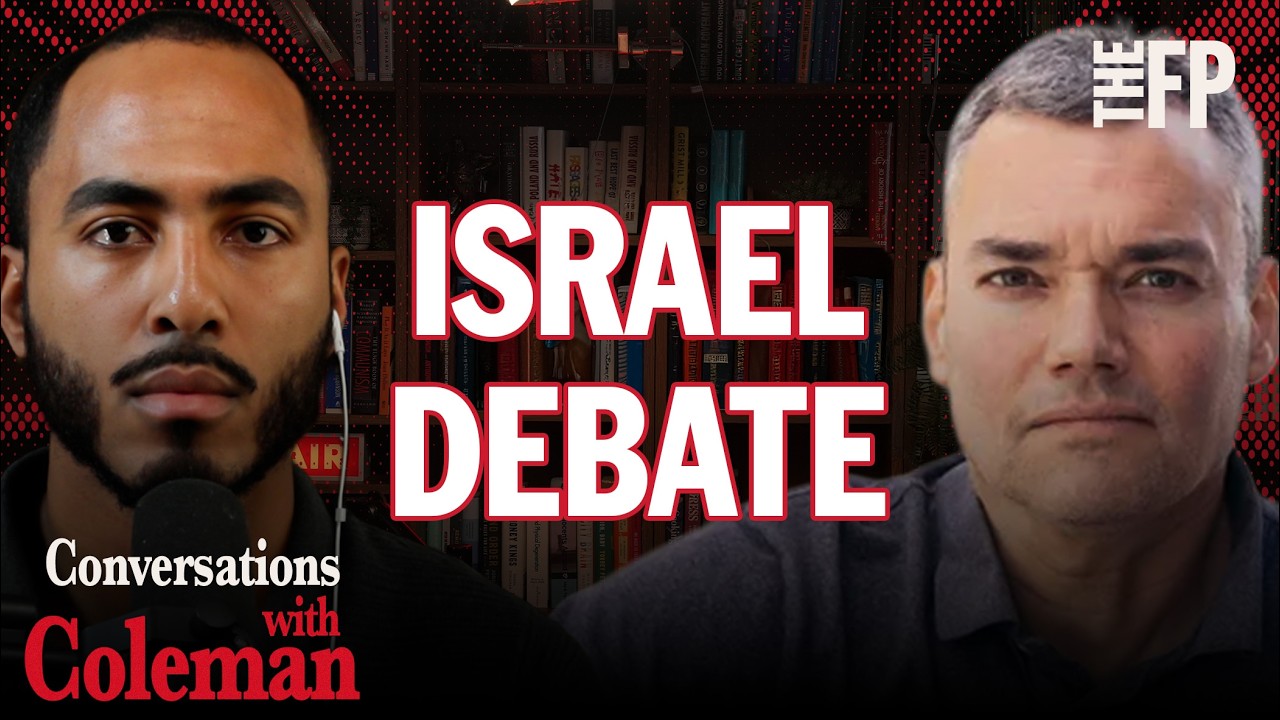
Peter Beinart grew up a committed Zionist and changed his mind. He now believes that Israel, as currently constituted, cannot be reconciled with the principle of equality under the law, and he has spent the last decade making that case publicly in The New York Times, Jewish Currents, and most recently in his book Being Jewish After the Destruction of Gaza. We dig into that, and a lot more. This is my third conversation in our ongoing series of debates on Israel-Palestine. I’ve talked to Dave Smith and Glenn Greenwald, both of whom come at the issue from a very different angle than Peter. What makes Peter’s perspective distinctive is that it comes from a place rooted in Jewish identity and Jewish tradition. He’s not hostile to Israel in the way that some of his fellow travelers are. He cares about it deeply, which is why I think his critique is worth engaging with seriously. We debate whether a potential Palestinian right of return would be comparable to Jewish immigration. I argue that the cases are fundamentally different, and that accepting the right of return as a universal principle would create chaos on a global scale. We get into whether a one-state solution would produce equality or civil war, and I push back on the South Africa analogy, which I think is superficially persuasive but falls apart under scrutiny. We also talk about jihadist ideology as an independent variable in the conflict, something I think the left consistently under-weights, and we debate whether Iran is a genuine existential threat to Israel or whether that framing is overblown. Strong disagreements on this topic have a way of turning ugly fast. This one didn’t, and I thank Peter for his willingness to engage. 0:00 Intro 1:35-Peter Beinart's Background and the Case for Equality 6:31-The Palestinian Right of Return 11:48-Israel's Law of Return and Immigration Policy 16:48-Who Started the 1948 War? 19:06-Should Any Country Preserve an Ethnic Majority? 45:01-The One State Solution and Risk of Civil War 48:34-The South Africa Analogy 57:36-What Nonviolent Palestinian Resistance Should the World Support? 1:02:31-Palestinian Nonviolence, BDS and International Pressure 1:05:43-Are There Arab Muslim Liberal Democracies? 1:23:48-Coleman's Engagement with Palestinian Voices 1:27:27-The Iran Threat and Is It Existential?
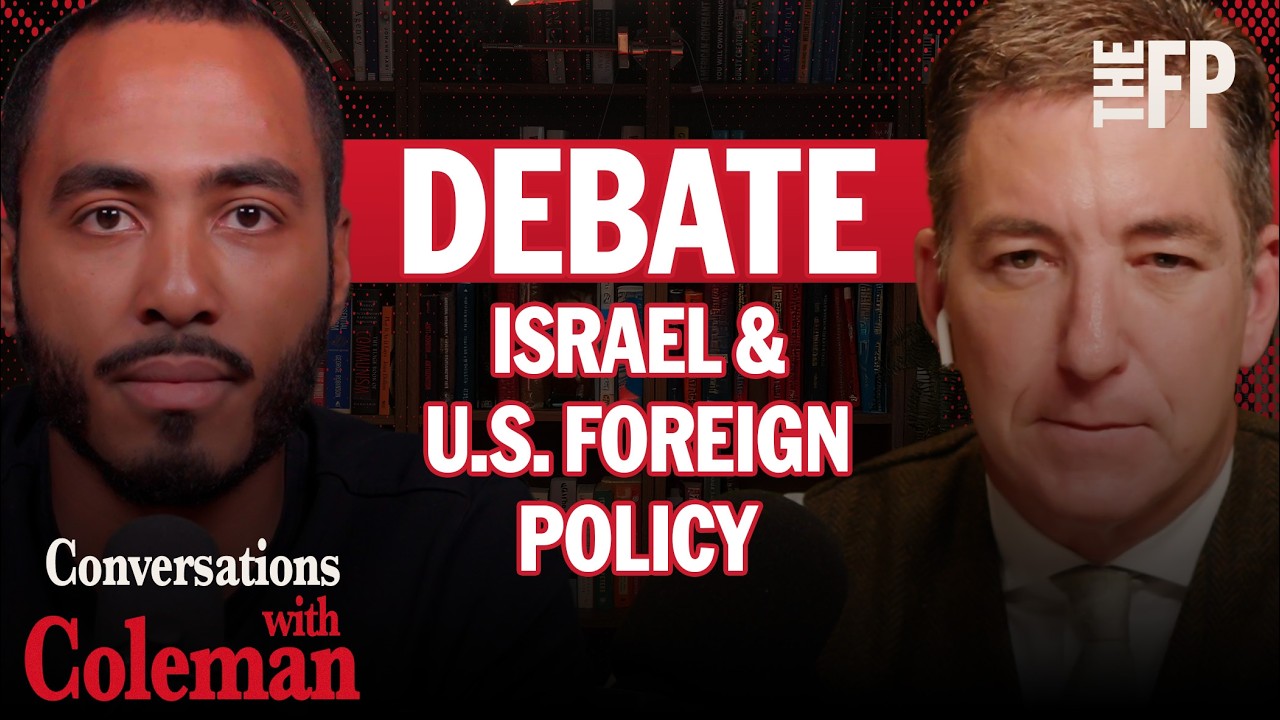
Glenn Greenwald joins the show to debate a hotly contested topic: What is Israel’s influence over U.S. policy? Glenn is a fierce critic of the US-Israel alliance and in this episode, Coleman and Glenn examine competing claims about the power of the Israel lobby and whether it played a role in the path to war with Iran. They discuss Iran’s nuclear ambitions, the case for or against regime change, and how these questions shape American foreign policy in the Middle East. The conversation also turns to free speech on college campuses after October 7 and the boundaries between criticism of Israel and antisemitism. Finally, Coleman presses Glenn on his alliance with Tucker Carlson and the responsibilities of independent media.

Think for yourself. Subscribe to The Free Press today: https://thefp.pub/3DmLpLi

Think for yourself. Subscribe to The Free Press today: https://thefp.pub/3DmLpLi